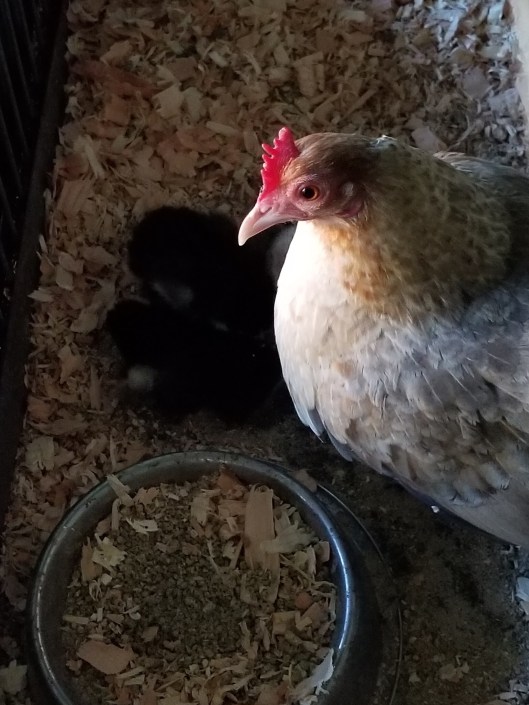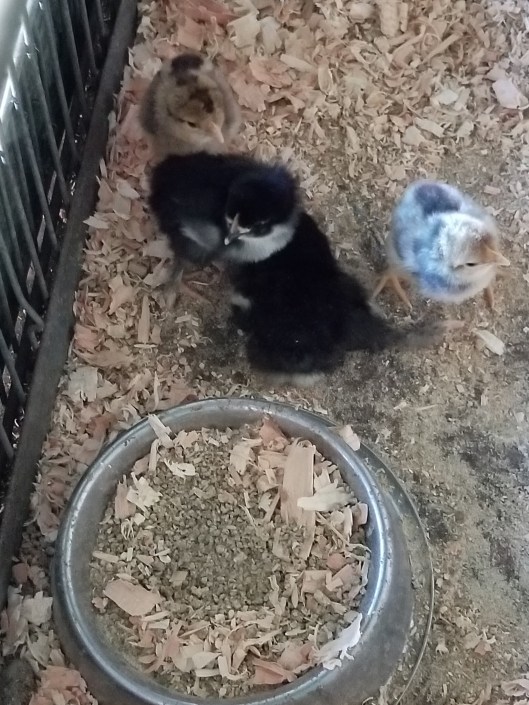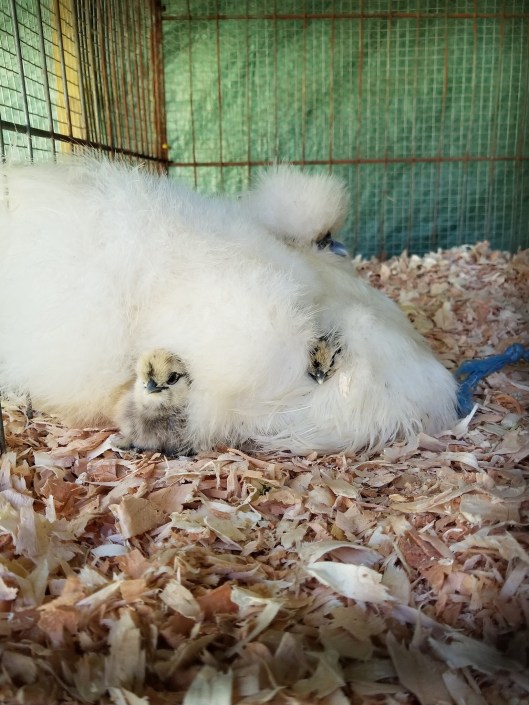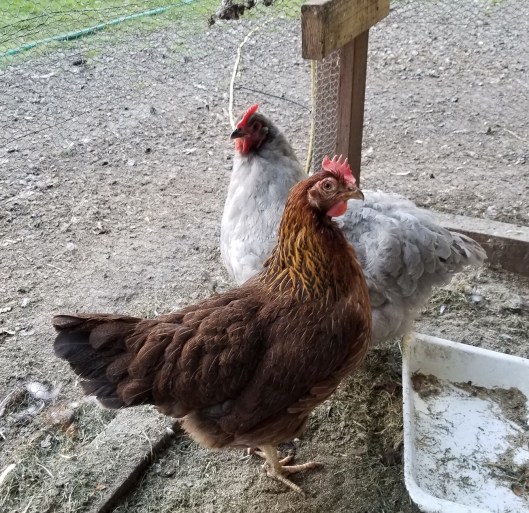
• Available in 2022 for Local Pick-up
  • Snapshot

Muddy Valley Farm

~ Life on a tiny west coast hobby farm

Muddy Valley Farm

Category Archives: Chickens

Merry Muddy Christmas!

23 Sunday Dec 2018

Posted by Jodi in Chance, Chickens, Farm Life, Seasons, Weather

≈ Leave a comment

AEFC506F-C46E-412B-97B0-9A1438BC242A

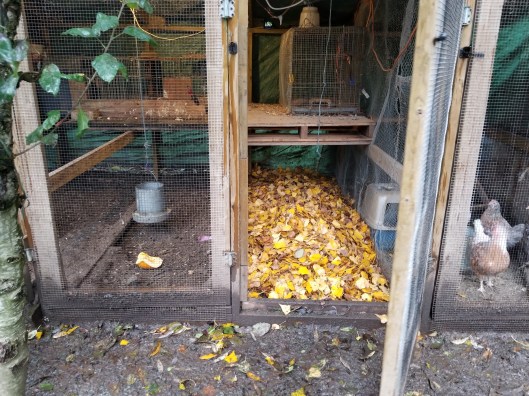
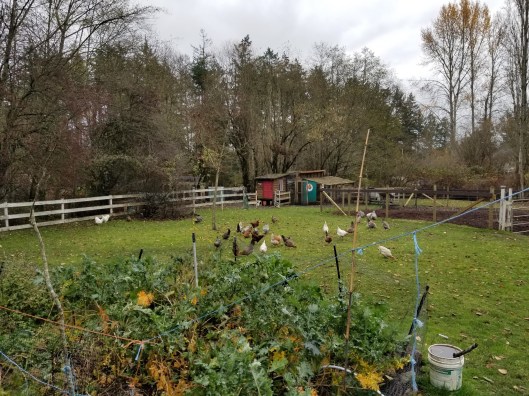
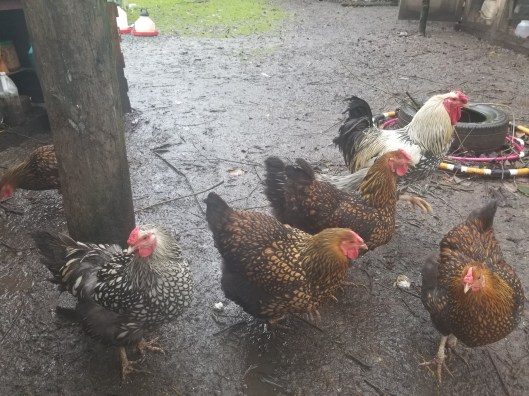
It took me two afternoons’ work, the last of my leaf hoard and a bale of shavings to get the upper hand over the barnyard mud, but it’s done. Victory is mine for now. My chickens will be cozy for Christmas. 

Is it silly to fuss about the barnyard creatures at this time of year, with everything else needing doing? Maybe, but a humble barnyard plays a pretty high profile role in the Christmas story, so it seems apt to me. 

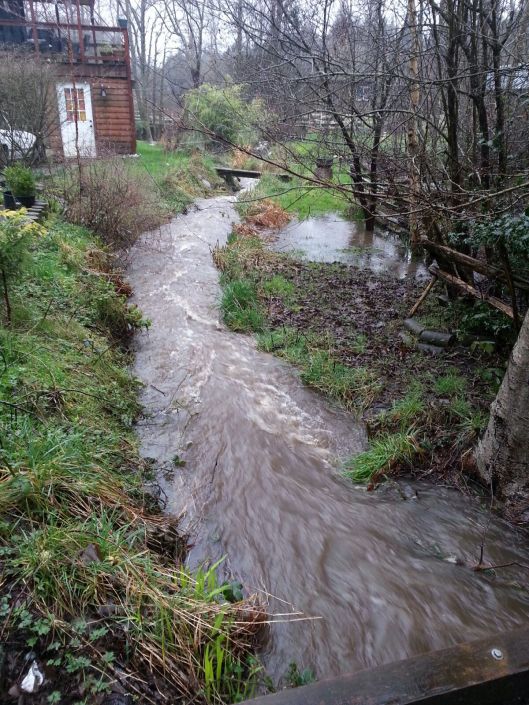
So far, it’s been a warm fall / winter with zero snow, rain storm after rain storm and a huge windstorm the other day, “the worst in twenty years!” No trees down and no power outages here in our muddy valley, lucky us, although we lost internet for a couple days. And we’re experiencing peak mud; a treacherous thin coat of the slippery stuff engulfing every pathway, soggy corners in every coop and spongy, squishy fields. The creek is roaring with delight, but the disconsolate equines don’t even ask to go out on grass. They know that without a hard freeze, they are stuck in their hog fuel paddocks until things dry up.
82108F4D-CC03-40F6-81C1-86966D9B5F21

In our wet coast climate, keeping the critters somewhat mud-free will continue to pose challenges until springtime. Even after all this weekend’s work, I know that a few days after Christmas, I will be heaving sopping shovel-loads out of the most popular barnyard hang-outs and as a last resort, laying pallets across the worst bits to keep the birds up out of the mud. Once the pallets are down, they are there till spring, when I will pull them up, hose them off and stack them away for next year.

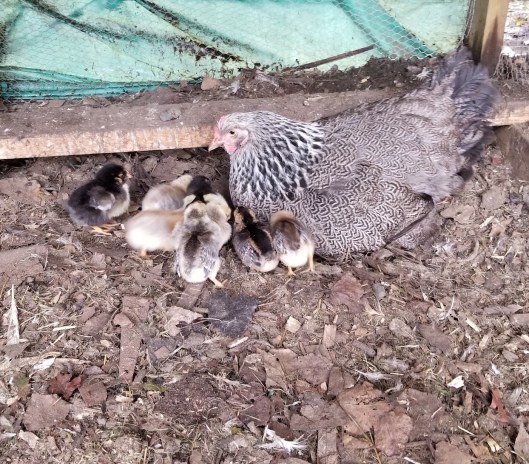
But we’re not there yet. In the dirt-floored Hen Hotel, my American gothic pitchfork does a wonderful job of lifting the top muddy, poopy inch to reveal dry soil below. The birds are thrilled at the dusty fresh dirt, and commence bathing instantly. Purpose-built peat moss and wood ash dust baths are within easy reach, but they much prefer the summer-dry soil, as long as it lasts anyway. I think they know it has an expiry date. The mud is coming.
327B7612-BFE1-472C-86F9-FAE6A1017404

Old man winter likely has a few more surprises up his sleeve, but I have a few tricks up mine too. Keeping the barnyard functional is lots of physical labour, and just what I need to keep my body moving, so I don’t mind a bit. Getting exercise while accomplishing something ticks all my boxes and always has. And keeping the barnyard creatures comfortable is pretty darned satisfying too.

D1042DCD-B2B6-408C-8A4E-CEEBBECD7979
A3211297-6AE4-4CBC-A64B-780138B4118A

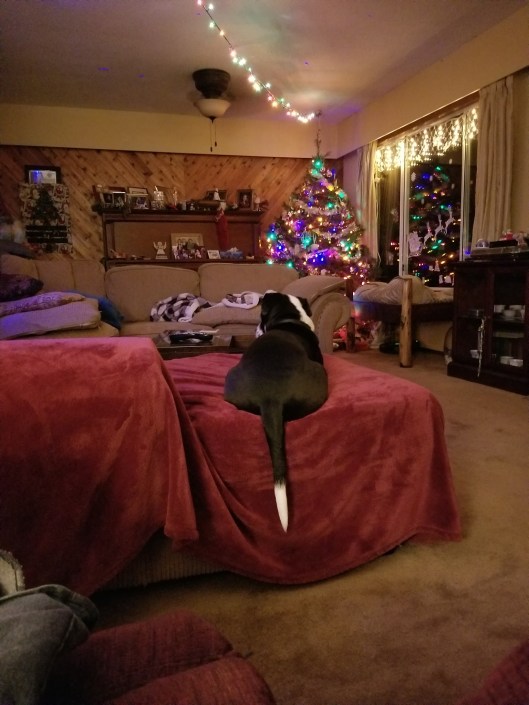
As we all soldier on through this darkest time of year, stringing our thin lines of coloured lights against the darkness, shovelling away the mud that threatens to engulf us and seeking out warmth and good company, I wish a Merry Christmas to you and yours, and a happy 2019 to come. May you find what you seek, and take joy in the seeking.

Thanks for listening.
1FF8DE39-BD20-44A3-A2DB-FE4B116F76D3

Hello Darkness My Old Friend

01 Saturday Dec 2018

Posted by Jodi in Chickens, Farm Life, Seasons, Weather

≈ Leave a comment

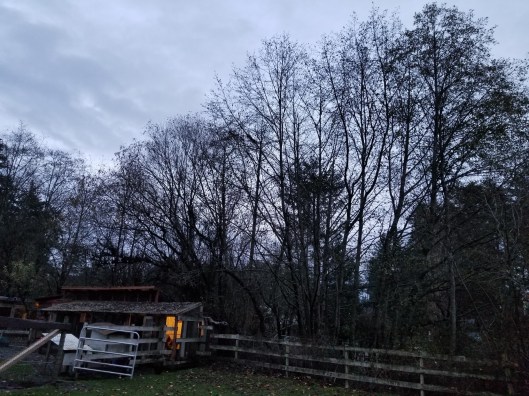
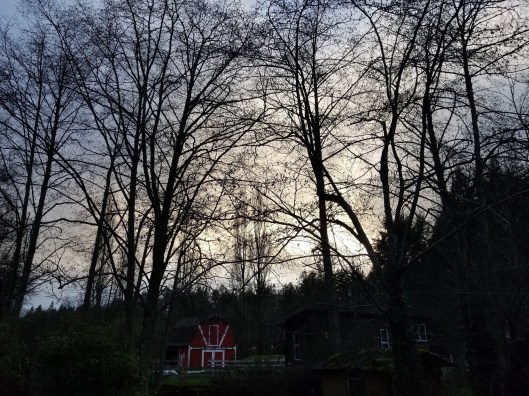
In yesterday’s growing dusk, as I pushed another loaded wheelbarrow of soppy chickeny mud through Babe’s field to the manure pile behind the barn, I bid a fond farewell to dear November, one of my favourite months.

F2E47B50-7CAF-42D9-BC78-26C911E013C2
C273956F-27EF-4898-8E88-5AC3D21C2310
72764D6C-A74D-44EA-8184-58AB96BE1089

Most of the leaves are off the trees now, and I have piles tucked away to be portioned out over the next few weeks, spread across muddy pens and sprinkled in coops to amuse my feathery tenants. Every couple of days, I give the slow-drying hoard a good toss with an American Gothic long-handled pitchfork, my hands-down favourite hand tool, happily discovered (for six bucks!) at our local “Re-store” used building supply.

6270C5F3-6336-47D6-AC03-75B51BE9C839
B107545E-D073-4E79-8FDF-0AE238D2D69F

They say it’s going to be a warm winter this year on the wet coast; we may not see any snow at all. Don’t tell anyone, but I’m kind of relieved. I do love the snow, my family rolls their eyes each year at my jubilance when the first flakes fall, but honestly, after the past couple years of climate change drama; the unusually long cold stretches, a foot of snow at a time and worst of all, frozen water lines, I’m ready for a milder time of it this winter. Will I escape this year? Avoid hauling buckets and buckets of water out to the barnyard, defrosting waterers and slipping around solid sheets of ice as I tend my flock? It seems promising. 

0F6DF840-9E09-4CB8-AFBB-217B80F8FFF8

We had decided, due to recent weather patterns, to insulate the water lines this past summer, but it didn’t happen. There are only so many hours in a day, and they got spent on higher priorities. Such is life. Perhaps though, the weather gods are smiling on us, granting a reprieve from the chill and thus another chance to deal with those lines. I resolve we won’t be like the old man with the leaky roof, who complains when the rain drips onto his bed, but sees no reason at all to climb up and fix his roof in the sunshine because the problem has vanished! Surely we will find the time over the next 365 days to get those water lines taken care of. I have high hopes.

For now, my priority is mud control, and each evening has me outside, in my new boots and trusty headlamp, filling a barrow or two, scraping down a roof here and a perch there, clearing out a drainage ditch here and a gutter there.  Respecting the rain, giving it somewhere to go. Accomplishing a little each day, with the goal of keeping my birds comfortable.

41768C8A-A157-4BAC-9BB5-A3A025EF06D2
223B40E0-A07E-404B-A239-0195B1F14A37

And, of course, as I toil I’m thinking about the season ahead. Today marks the start of my annual tumble down December’s steep, steep hill. The month that starts out with my birthday and then, after that minor shock (I’m HOW OLD!?!),  accelerates the closer I get to the bottom. Wish me luck as I work hard to stay upright and in control, my feet well under me and motoring along, getting it all done on the hectic lead-up to our annual celebration of light, and warmth, and family.

187BB9E6-B5BA-4783-8FAF-85D02B126CBD

Squirrelling Away the Sunshine

03 Saturday Nov 2018

Posted by Jodi in Chickens, Farm Life, Farm Produce, Gardening, Seasons, Weather

≈ Leave a comment

Yesterday’s sunshine has given way to today’s west coast mist, so I am happy that I got out and raked up some relatively dry leafy sunshine for my flocks yesterday afternoon. That meant I had to hit the home office at dusk and work till almost seven, but it was worth it.

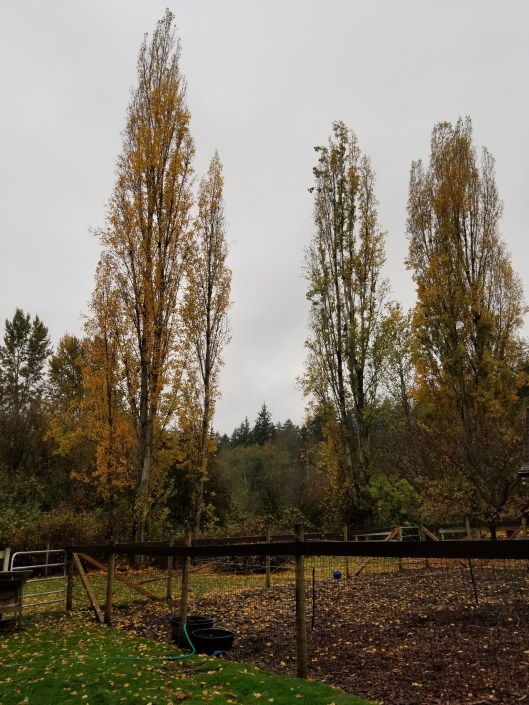
We are lucky to have lots of poplars, alders and hawthorns growing in our muddy valley. Unselfish creatures, they delight the eye all year, flaunting their fresh green garments in April’s spring breezes, perfuming the warm air with their snowy flowers in June, shading us from August’s glaring sun, shifting from green to gorgeous gold in September and sharing their leafy bounty freely in October.

89EF96AA-C7C6-4AF1-A146-53D88A6D6277
60CDE923-ED75-4786-A086-6DA098484D66

I always harvest as many as I can, weather and time permitting, squirrelling them away here and there in unused coops and under eaves. I try to gather them dry, which is often a challenge in our rainforest climate.

8A40410D-3724-4EF7-83A9-F942ACD9A54A

Dried, they make fresh, fragrant bedding, and even wet, the birds love raking through them for tasty morsels. But a wet pile of leaves soon becomes a slimy pile of compost, not much good for chicken keeping although excellent for garlic bed mulch, especially when mixed with liberal lashings of chicken poop.

E37CBDB3-7936-4F86-BC41-AE33E1C37F5D
223B40E0-A07E-404B-A239-0195B1F14A37

Today at morning chores I happily scattered bright yellow leafy goodness all around the coops. I can tell my birds appreciate them too. Glowing as if lit from within in this dim grey weather, they brighten everyone’s day.

17E0DB47-A6F6-46C0-B337-FE5475C38F54

And oh boy, just look at how many are still left! Golden riches, held in benevolent twiggy hands that can be counted on to share them generously, every last one, as our tall, slow living, quietest valley residents settle themselves down for another long winter nap.

F2E47B50-7CAF-42D9-BC78-26C911E013C2

Tiny Chicken Finishes the Job

13 Friday Jul 2018

Posted by Jodi in Chickens, Farm Life

≈ Leave a comment

I am pleased to announce that Tiny hatched out all four of the eggs Miss Welsummer abandoned; two Legbars, a boy and a girl, and two black Copper Marans, sex unknown. Good job Tiny!

EA579885-D66B-47F8-A8BB-5AA6574208DC

Three healthy chicks had arrived by yesterday, but the little latecomer, a Marans who hatched sometime in the night, has spraddle leg. I have seen this before, it seems to happen sometimes with late hatchers, and if caught early, can be completely cured. Is it the late hatching that does it? Or does it delay hatching? Who knows.

ED1ADEBD-1FA5-4A48-842D-88F1DB622BFB

So off to the incubator room we went, little Marans and I, she protesting at the top of her voice, to apply a bandaid splint. Chances are good that she will make a full recovery.

5A75F4A6-593D-4B70-9057-60B47D5F80EA
CC858DA4-277B-426E-80D3-D0A5520F12CE

Tiny Chicken Saves the Day

02 Monday Jul 2018

Posted by Jodi in Chickens, Farm Produce

≈ Leave a comment

50EC334B-7E04-4F89-AEBA-5D7CB50A6B6E

Some hens never feel the need to raise a family, while other hens do and are great mothers. Then there are the “wanna-be’s”, who feel the urge but do a poor job of executing. They’re just a pain.

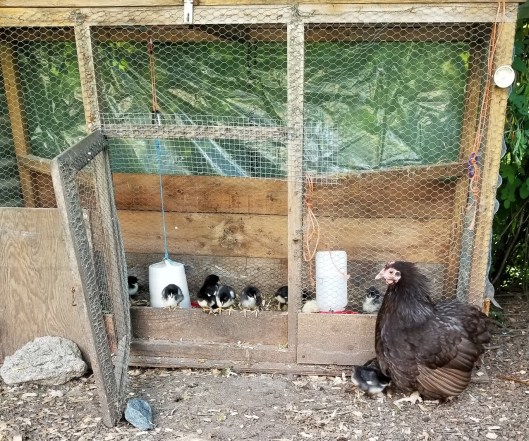
A proven broody is a valuable commodity around our muddy valley. Not only does she do all the work, she will usually accept any number of extra chicks quietly slipped under her after dark. As those of you who have spent any time at all scraping stinky chick poop out of basement brooders will agree, that’s a real plus!

Non-broody hens are pretty fine too, they don’t take time off like broodies do, they just keep popping out those delicious farm fresh eggs. In fact, I prefer that most of my hens be non-broody. I only need so many, especially because I find it impossible to say no to a wanna-be.

People “break” broodies all the time – discouraging them until they give up the idea of motherhood entirely. They house broodies in breezy wire cages hung from the ceiling, to cool off their nether regions; or plunge them in cool water several times a day. But I can never bring myself to deliberately break a brood. It just seems unfair to me, to let some hens raise families and others not. Every hen should have the opportunity to fulfill her procreative purpose.

CF0B4893-1D84-45A9-A8E8-07093F6D87B1

I doubt the chickens have as keen a sense of justice and equality as I do, but the wanna-be’s certainly benefit from my impracticality on this subject. A tried and true crazy chicken lady, I give everyone a chance. Or two.

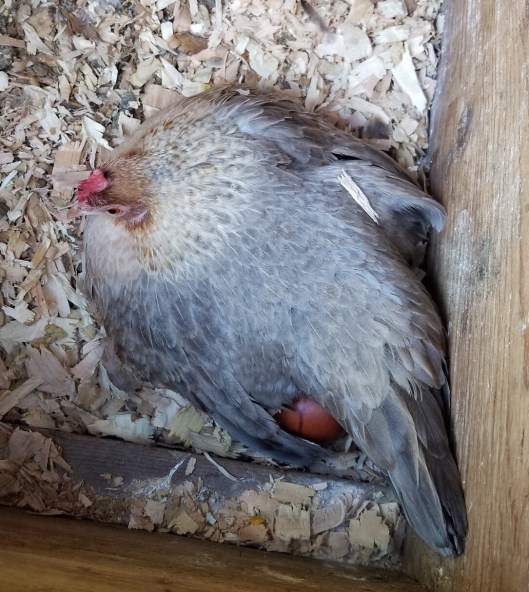
A couple weeks ago, two year old Welsummer hen went broody for the first time. I already had more than a dozen hens either setting or raising young, plus I know that older wanna-be’s are often extra hopeless, but I pushed away my reservations and set her up anyway on a few Legbar and Marans eggs. She stuck like glue for the first twelve days, but started to get restless over the weekend. Today when I opened her broody box to feed and water, she flew the coop.

40839410-BDE9-461A-BF08-D97F5B5B43A8

There was a chance she only wanted to stretch her legs, to escape for a little sun like Daisy Mae in Dr. Seuss’s ‘Horton Hatches the Egg’, and that she’d return to her eggs after her holiday. But the broody box is a restricted entry facility, so I carefully moved her eggs next door to an open nest box. Maybe that would tempt her back to what she had already invested two weeks in. I knew the eggs would likely be fine no matter how much she dithered, I have seen hens let half-baked eggs get cold for up to 24 hours in mid-winter, and still got a decent hatch. Chickens are pretty amazing that way.

Hours later I returned to find Welsummer still hanging out in the sun, casually flipping dust through her feathers with her pal Lavender Orpington. “Well that’s that, she isn’t interested” I thought, feeling bad for the poor little chicks still a week away from hatch. But when I peeked into the nest box, there WAS a broody hen diligently setting on those eggs, my half-pint Tiny Chicken, an OEGB no bigger than a pigeon.

D1FD5336-929B-4C81-8DD5-5BE8FE082B08

With a look of intent concentration on her little face, she had flattened herself out to her utmost to cover those six eggs. That’s when I remembered that Tiny had been trying to set the past few days, but having no spare box to set her up in, I had been in denial about my little broody #14, and just kept scooping her up off whatever eggs she had gathered that day and setting her down outside the coop.

“Well,” I thought, “awesome, it looks like Tiny has saved the day,” and I carefully moved the eggs, and then Tiny, over into the broody box. An experienced mama, Tiny settled down right away again, the good little thing.
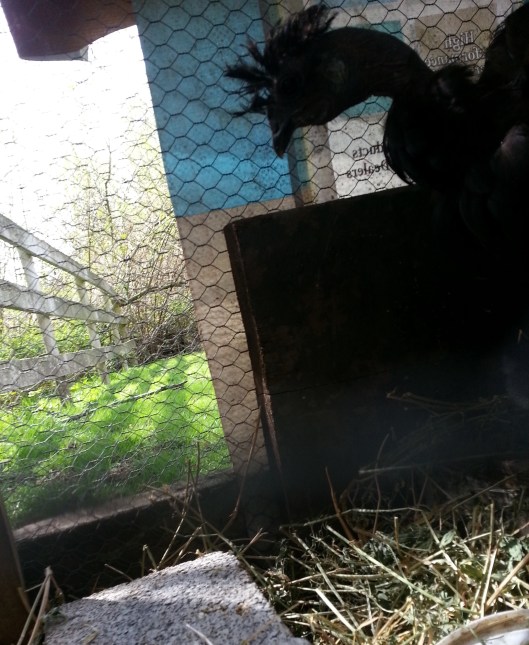
Tonight I candled, and removed two quitters, leaving her with a more manageable four eggs. In about a week, if all goes well, Tiny should get her reward!

A2488CC4-CC57-4C6C-8C23-D33B396AF9F5


Chickens 4 Dayz…

20 Wednesday Jun 2018

Posted by Jodi in Chickens, Farm Life, Seasons

≈ Leave a comment

So many broody hens in our muddy valley, and two more ladies declared their intentions today, veteran Alsty and newbie Welsummer.

A full quarter of our year round chicken population is engaged in procreation right now. That makes it tough for our egg customers, broody hens stop laying. We have:

– Four Silkie hens raising chicks – White Silkie 1 and White Silkie 2 who each have a brood, and Brown and Black Silkies  co-mothering their second batch this year, 

50EC334B-7E04-4F89-AEBA-5D7CB50A6B6E

– A Swedish Flower raising her lone chick in the coop with the flock. (That one was a complete shock, I lifted her up one day and a chick fell out of her feather petticoat), 

– A Marans in the barn setting on eggs, 

– Another Marans who has just finished raising babies and gone back to her flock, 

– Sparkles the Auracana, who has just done likewise,

– Brownie the chocolate Cochin, almost finished raising her first brood of the year.

7E6D9699-EDA3-4F28-8413-2B01DB52AAC1

– A Silver Sussex in the laying coop, about to hatch a passel of Legbars, and 

– A Barred Rock in a broody box, deep in her setting trance. I prod her each day to make sure she is still with us, and she growls in return. Broodies get so grouchy.

That’s eleven, plus these two new ones makes a baker’s dozen.

Where the heck am I going to put Alsty and Welsummer? Is it time for some chicken infrastructure updates? Uh oh, maybe…stay tuned!

Silverudd’s Blå Chicken

09 Saturday Jun 2018

Posted by Jodi in Chickens, Farm Life

≈ Leave a comment

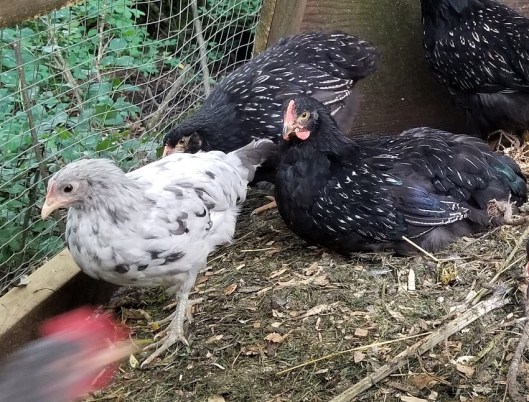
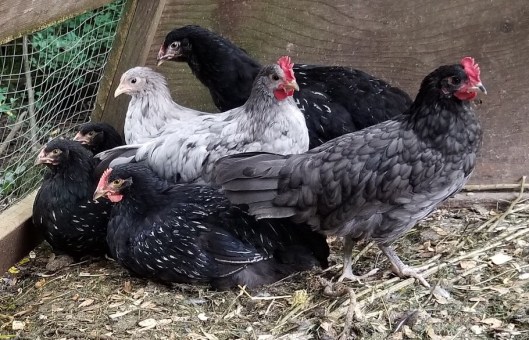
Funny name for a chicken breed eh? This feisty little Swede comes in three colours, blue (Blå), black and blue splashed white. The Bb gene controlling their colour has been bred into lots of chicken breeds. Blue chickens are pretty, plus it’s fun to breed for colour.

Breed any two blue (Bb) birds together and you will get 25% black (BB), 25% blue splashed white (bb) and 50% blue (Bb). Blue birds have two copies of the Bb gene (heterozygous), blacks and splashes have one (homozygous). Breed two blacks together, get all black chicks. Breed two splashes, get all splash chicks. Or breed a black with a splash and get all blues. Mesmerizing, isn’t it?

Besides that fun colour shifting gene, Silverudd’s Blues get a blue/green egg gene (from their Cream Legbar blood) and lay-lots-of-eggs genes from their Rhode Island Red, New Hampshire and Swedish Leghorn blood.

What’s not to like about a cool little green-legged chicken that comes in three colours and lays a ton of pretty green speckled with brown eggs? Nuthin, that’s what!

00CB623C-B046-4F1C-B057-BD4D13008337

Twelve weeks old and their sex has been obvious for a while now.

Martin Silverudd, a Swedish monk and chicken aficionado, started developing the breed in the 1960s. Many amazing and wonderful things got their start in the 1960s, including me. My grandpa was named Martin too, but that is where the similarities between me and Mr. Silverudd’s hens end.

Martin Silverudd developed other breeds as well, including one called the Isbar (ice-bar), before he died in the 1980s. Sometime in the 1990s, the Swedes who were breeding his productive green egg layers started calling them Isbar Blues, and that is the name the breed was imported into North America with.

Now, the main problem with the name Isbar is the ‘bar’ part. These chickens have no barring anywhere on their sleek little bodies. Keeping ‘bar’ in the name would never do.

So in 2016 some chickeny folks, over at the Svenska Kulturhönsföreningen (Swedish Culture Poultry Association), decided to officially rename the breed. Mr. Silverudd had called it the Svensk Grönäggsvärpare (Swedish greenegglayer), but that was too generic they felt and would never do either.

After much discussion, the Association members voted for Silverudd’s Blue, to memorialize the breeder of this by now globally sought-after chicken. That’s surely a cultural poultry milestone if ever I heard one!

DB8DFBCD-2FC9-4B89-B8A1-48358CDD7C13

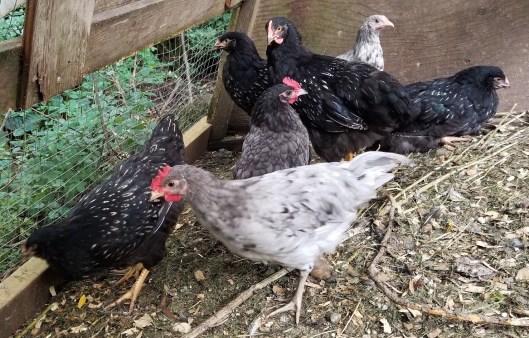
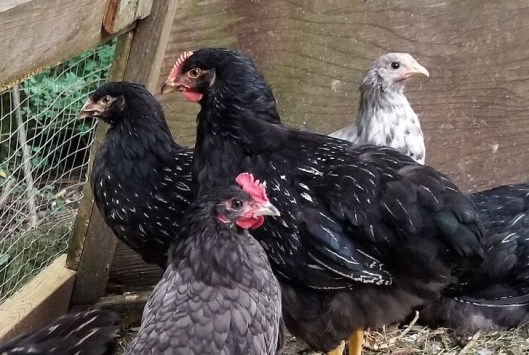
I won an auction for a dozen Silverudd’s Blue hatching eggs this spring, and after shipping the eggs from Alberta managed a pretty good hatch, although a few of the chicks died off mysteriously one after the other during their first week after hatch. I read that a certain amount of early mortality is common with this rare breed, the gene pool is limited. I ended up with a blue pair and a splash pair for sure and maybe a black or two although I haven’t yet done a firm count. They move fast.

I hatched my Silverudd’s Blues with a batch of Silver Double Laced Barnevelders (this year’s “must have” breed, judging by the insane prices they are going for – $100 for a pullet!) and I’ve kept the Silver* group together. I find keeping hatches as flocks helps everyone feel secure. Chickens really do bond with their hatch mates.

A5662A95-E58C-4766-9933-8D8FC0463DE1

Silverudd’s Blue Pullet and Cockerel and Silver Double Laced Barnevelders Pullet and Cockerel

This flock represents my 2018 trial breeds. I’m just watching them grow and getting to know them. Eventually I will have to cull the roosters, but I will keep the hens together long term so I can see how they get on, and decide if I might like to breed them in the future.

So much of choosing breeds for me is about personality and then performance. I have raised lots of breeds over my chicken keeping career, really disliking some and loving others. I think, so far, that I like these Silverudd’s Blues pretty much.

For one thing, they are cheap to feed. I have never seen any breed as good at foraging! Every time they find another huge worm, which they excitedly split amongst themselves and gobble down with glee, I think “great job! Less protein for me to have to buy!” They free range from morning to night, and seldom eat from the free choice feed hanger.

9CEA327B-2C3E-4636-B263-2A3FE43CE6E9

They are small too, built like thrifty leghorns, so their feed to egg ratio should be super efficient, especially given their formidable egg-laying reputation. I will find out in a few more months, when they start to lay. And finally, they are quiet. I can’t abide a whiney chicken (Ancona, we’re talking about you!). I will find out soon if the roosters are as quiet as the hens (as will my neighbours…sorry in advance, neighbours).

I am enjoying my very pretty very pricey Barnevelders too, although they seem a little flighty. Lots of people just love their “Barnies”, so I am looking forward to finding out what all the fuss is about there, as they grow up and their personalities really start to shine.

A40C79AD-FB3B-4E3C-A78E-CB3C7ADEEAC2


The Chicken Lottery

27 Sunday May 2018

Posted by Jodi in Chickens, Farm Life

≈ Leave a comment

Brownie Chocolate Cochin is a great mom. 2018 is her third year hatching a couple batches per year. This time though, she had a very strange hatch. Brownie had been cooking six Legbar eggs and on hatch day, one bright-eyed little Legbar chick made her appearance right on schedule. But two days later, Legbar pullet was still an only child! Brownie had tried to help another exit the egg, with disasterous results, the chick didn’t make it.

After that, Brownie decided she’d had enough. She abandoned the nest, taking her little singleton with her. I moved them into the clean spacious brooder I had all set up, where Brownie just sat, head down, in the corner, with her little one poking around aimlessly beside her. She was one unhappy momma.

I wasn’t too concerned, because I knew something that Brownie didn’t. I like to set a few eggs in the incubator when a hen goes broody. I might as well get my hens to do all the work of raising chicks. So I had a bunch more babies to tuck under Brownie, after dark so she would accept them as her own. That would cheer her up, but she didn’t know and of course I couldn’t tell her. I haven’t quite figured out how to speak chicken yet. Poor Brownie spent the whole day in a funk. Post-partum depression, chicken style.

A little later I went back to the nest box to clean up, remove the unhatched eggs and replace the bedding, and as I picked up the first egg it yelled at me! I nearly dropped the darned thing. That egg was not only alive, it sounded pretty pissed off. I gathered up all four, since they all felt heavy and full of potential, then headed for the house.

Once inside, I plugged in an incubator to warm up, then ran some warm water into a yogurt tub to float test the eggs. Float testing is a great way to see if a chick is alive, if so, the egg will wiggle in the water quite distinctively. The soaking is good for softening the shell too, although it is important to check the egg for cracks before submersion, to make sure you don’t drown a little one.

All four eggs wiggled, so into the incubator they went, along with the warm water which would bring the humidity so necessary for the hatching process up.

Then I waited. That evening, nothing. The next morning, nothing. By this time, we were at 24 days on these eggs, and they should have hatched on day 21. Taking the bull by the horns, so to speak, I poked a small hole into the air cell at the top of each egg and had a look inside. Four babies, still moving, still alive, and all internally pipped.

There are two membranes between an unhatched chick and the egg shell, and once they pierce the inner membrane with their beak they begin to breathe (and peep). Thus the yell I had heard in the nest box. It seemed to me that these babies were trying very hard to hatch, but with not enough moisture left in the eggs to keep things slippery, they were “shrink wrapped”.

I guessed that Brownie had spent a bit too much time off her eggs over the 21 days, slowing development, except for the egg in the middle of the clutch. That, combined with the dry warm weather we have had this May, meant the chicks were awfully late to the party and a bit of help was in order. So I peeled back some of the shell and outer membrane on each, moistened the inner membrane with warm water and back into the incubator they went.

The next morning, one chick had hatched and was staggering around the incubator. I pulled the other three and had a look. The day before, when I had wet the inner membranes, I saw they were lined with delicate webs of blood vessels filled with blood. If I messed with those the chicks might bleed out.  Today the blood vessels were empty and brown. The inner membranes were no longer linked into the chicks’ circulatory systems. I knew I could chance a little more intervention.

E8D960CF-0E5A-4D0F-8F54-F1B6C46161A9

Birth is messy

I started peeling carefully at each tiny beak’s air hole, opening the inner membrane enough so that the head unfolded and popped out. That moment (times three) when each baby opened a bright black eye and stared into mine, was pretty great. I said hello, then put them back in the incubator to finish (or not) on their own.

The next morning (by now we were at day 27!), everyone was out, fully hatched, and learning how to use their legs. It looked like I had mostly girls! Usually chicks hatch half and half, so I was sceptical, but sure enough, once they fluffed out and I could take a close look, I found that I had indeed hatched out four girls. With Brownie’s singleton that made for a 100% female hatch. Wow. I won the chicken lottery.

66EE9362-16A4-4A80-9E63-9488EF63C07A

A dozen little Black Copper Marans and three baby Bresse went out to join Brownie and her singleton that first night. Morning must have felt like Christmas to dear Brownie. Her mood had sure improved by the time I went out to feed.

80CEF9D0-9EFF-4179-9A61-7FA15D318DB8

Can you believe she has sixteen under her? She has one wing spread, like a travel trailer “bump-out”.

Meanwhile the four Legbars are running around the indoor brooder, perky as can be, along with ten Silkies I hatched for the next broody in line. Brownie has enough to do with her sixteen, I think these ones will go out to White Silkie Two in a couple days when her hatch is done. I just love happy endings. 💕🐣

7E6D9699-EDA3-4F28-8413-2B01DB52AAC1

A Showgirl’s Life

05 Saturday May 2018

Posted by Jodi in Chickens, Farm Life

≈ Leave a comment

Vegas the Showgirl came home to our muddy valley in the spring of 2013. Midnight black, with a svelte naked neck, a neat round figure, a jaunty hairdoo and a sparkle in her eye, she was hatched on a farm up island, that my friend, after our trip there, dubbed Chicken Africa.

62952A19-05A1-4E6E-86A8-09EDCFAAD6D8

My friend had spent time on the African continent (and has since been back at least twice) and loved the vibrant, busy, resourceful culture and bountiful nature she found there. I got it. Enclosed by a dilapidated patchwork fence that somehow managed to hold up its end of the bargain anyway, Chicken Africa was a lively place full of interesting inhabitants.

Lifting the baling twine latch and passing through the vintage tubular steel and wire filigree gate that had once, long ago, been painted white, we walked by a large male turkey nibbling the front lawn and carefully followed our host along a wood pallet causeway into the back yard.

Chock full of coops, sheds, an ancient greenhouse, old dog houses and cages draped in plastic; and webbed with complicated arrangements of used fish netting, chicken wire, hardware cloth and string, the back yard was a bustling place. Each of the many pens held its own small group of birds, breeding trios and quads mostly, all different types. The greenhouse was split into three grow out pens, each home to twenty or so teenage Silkies destined, eventually, for Chinatown soup pots. There was even a death row, it’s lone occupant a plump Cornish cockerel who would be Sunday dinner.

Nothing went to waste in Chicken Africa it seemed, worn out tires held dust baths and nests, while old pots and pans and bits of crockery held water and cracked corn and crumble.

Our kind host showed us all her diverse collection, and she showed us her pride and glory too, a pair of vintage Leahy redwood incubators, each a work of art capable of holding 160 or so eggs. They were beautiful. They don’t make ‘em like that any more, and some day I will own one.

My friend and I each chose a few point of lay hens, Silkies mostly plus a showgirl each, handed over some cash, loaded up our new birds, and headed back down island.

604BCDB9-6B79-4538-9760-AFA5A1A4A04A
84CD5F29-E1E8-493C-9E82-1CB699300133

Vegas earned her name when she went broody, and what a good mother she was. She raised two broods every summer, and laid eggs every winter. This spring she slowed down considerably and I knew she was getting ready to leave. Yesterday, I found that she had quietly embarked on her journey to the ever after.

Farewell Vegas. All in all, you lived a pretty good life. You were a faithful layer, a gentle flock member and a great mother. Five years is a good run for a chicken, although not exceptional. You were pretty exceptional in my book though. Thank you for decorating my barnyard, sharing your eggs and contributing your motherly skills to the increase of my flock.

Rest In Peace little chicken.

A10074B4-43C7-421E-A4E3-241A2FDD76B9


Mink!

29 Thursday Mar 2018

Posted by Jodi in Chickens, Farm Life, Wildlife

≈ Leave a comment

 So I’m out on the deck with hubby when he exclaims “Oh! Won’t you look at that!” I look down the outside stairs and there’s a mink, halfway up, staring at me with one paw on the next stair, as if considering whether to keep coming. I growl, he turns tail and runs down the stairs, across the lawn and into the creek, where he disappears, heading downstream.

3A33D415-E140-4D3F-8DD6-E43158F4DC87

Concerned for my flock, I pull on my boots and start down the valley, following the creek to the coops. Me and the dogs hang around for a while, fill a few waterers, watch some chicks play, etc., but no mink shows up. After about an hour I head back to the house to grab my phone.

As I cross the bridge leading into the back yard I look up at the deck stairs. That damned mink is half way up again! This time, staring at me off the side of the stairs! I growl, the dogs run, and the mink bolts down the stairs and into the creek again, exactly like before.

1BE745EC-2183-41CE-867B-F453ACE99743

I do not know why I growl in these situations, just that it seems appropriate.

“Hmmmm”, hubby says, “S has been hearing scratching above her room (which is under the deck) but nothing getting caught in the rat traps. I wonder if that mink is living between the deck rafters?”

I think he may be right! We might be playing host to a mink den. Oh boy. This could get interesting.

1702DDFA-6D5E-4128-9A9B-4C42466C7B0C

← Older posts
Newer posts →

Subscribe

  • Entries (RSS)
  • Comments (RSS)

Archives

  • March 2023
  • May 2022
  • February 2022
  • December 2021
  • November 2021
  • August 2021
  • June 2021
  • May 2021
  • March 2021
  • February 2021
  • January 2021
  • December 2020
  • November 2020
  • October 2020
  • September 2020
  • August 2020
  • July 2020
  • June 2020
  • May 2020
  • April 2020
  • March 2020
  • February 2020
  • January 2020
  • December 2019
  • November 2019
  • October 2019
  • September 2019
  • August 2019
  • July 2019
  • June 2019
  • May 2019
  • April 2019
  • March 2019
  • February 2019
  • January 2019
  • December 2018
  • November 2018
  • October 2018
  • September 2018
  • August 2018
  • July 2018
  • June 2018
  • May 2018
  • April 2018
  • March 2018
  • February 2018
  • January 2018
  • December 2017
  • November 2017
  • October 2017
  • September 2017
  • August 2017
  • July 2017
  • June 2017
  • May 2017
  • April 2017
  • March 2017
  • February 2017
  • January 2017
  • October 2016
  • August 2016
  • December 2014

Categories

  • Chance
  • Chickens
  • Equines
  • Equipment
  • Farm Improvements
  • Farm Life
  • Farm Produce
  • Feminist farmer
  • Gardening
  • Liza and Arrow
  • Preserving
  • Reduce, reuse, recycle
  • Seasons
  • Uncategorized
  • Weather
  • Wildlfe
  • Wildlife

Meta

  • Create account
  • Log in

Blog at WordPress.com.

  • Subscribe Subscribed
    • Muddy Valley Farm
    • Join 64 other subscribers
    • Already have a WordPress.com account? Log in now.
    • Muddy Valley Farm
    • Subscribe Subscribed
    • Sign up
    • Log in
    • Report this content
    • View site in Reader
    • Manage subscriptions
    • Collapse this bar
 

Loading Comments...